“The fundamental way towards ensuring that our countries are prepared to effectively support citizens and residents of neighbouring countries in distress is through developing effective programmes to support frontline agencies”, emphasized Dr. Clarence Henry, Senior Technical Officer in the Regional Integration Unit of the OECS Commission.
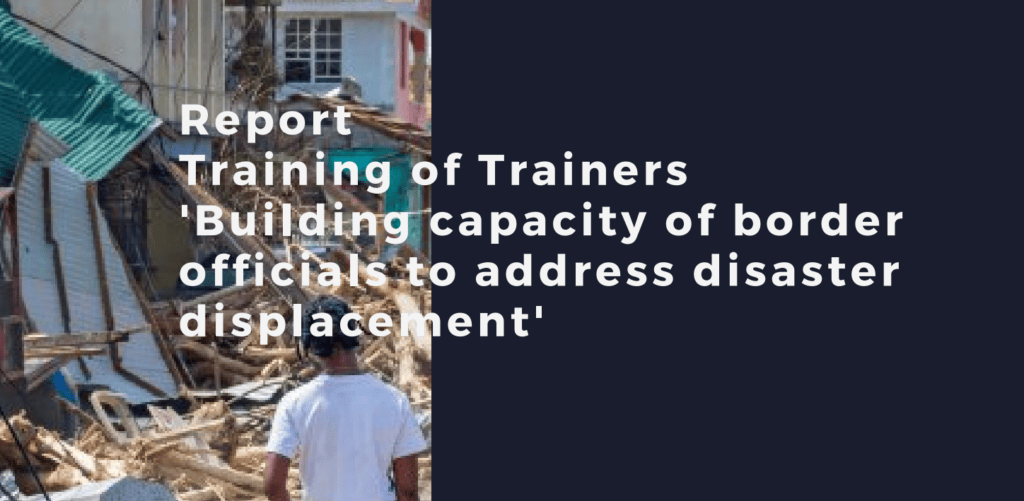
Through a train the trainer (ToT) programme border officials have gained knowledge on cross border displacement issues. Furthermore, senior border officials in the Organisation of Eastern Caribbean States (OECS) and Caribbean Community (CARICOM) Member States are now better positioned to lead training programmes for their peers in the three thematic areas covered by the ToT programme. To facilitate the national training programme that will be implemented later this year participants received a training manual which provides guidance on teaching pedagogy, tools, techniques and activities that can be undertaken to transfer knowledge on the key thematic areas taught during the ToT programme.
The ToT was developed and carried out by the Organisation of Eastern Caribbean States (OECS) in collaboration with the Caribbean Community Implementing Agency for Crime and Security (CARICOM IMPACS), the German Development Cooperation (GIZ), the International Organisation for Migration (IOM), the Platform on Disaster Displacement (PDD) and the United Nations High Commission for Refugees (UNHCR).